
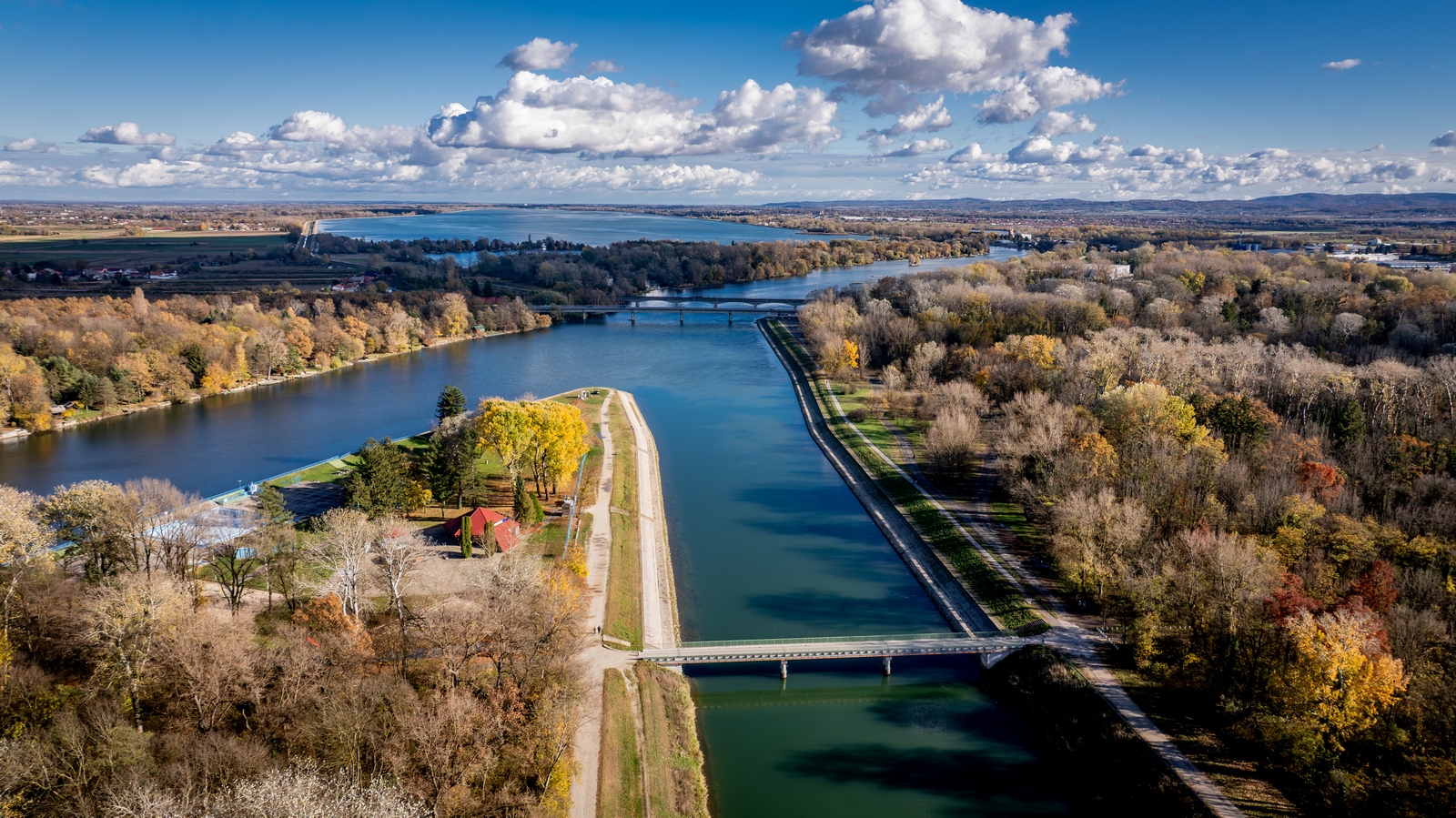
The proximity of water has always been one of the main advantages for the establishment of settlements, and so the Drava determined the location of Varaždin and influenced its development as an urban center. The city was founded near the river, but far enough away that the capricious Drava did not significantly threaten it during the once frequent overflows of its riverbed. Today, this river, which the city has approached all the way to its banks, no longer poses a danger to its inhabitants: it is the last oasis of peace and greenery for many Varaždin residents who are looking for rest and relaxation from the hustle and bustle of the city.
Forests along the Drava in the city of Varaždin
Historical sources and literature mention various names for forests, groves, groves, willows, pastures and arable land, as peripheral city areas along the Drava. From the earliest times known from historical sources, these lands belonged to the city municipality, which had pursued a reasonable economic policy towards its estates since the Middle Ages, so the yields from these estates also constituted an important item in the city budget. The size of the forests along the Drava River probably did not change significantly from the Middle Ages to the second half of the 19th century, as no expansions or conversions of forest areas have been recorded. Interventions that caused significant reductions in these forests were carried out during the 20th century, when new tree plantations were planned in the area along the Drava River near Varaždin.
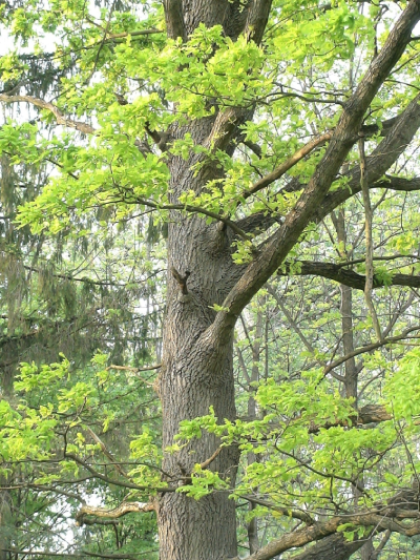
In the area of today's Forest-park, a large number of specimens of allochthonous tree species were planted before the Second World War, such as spruce, Asian plane tree, horse chestnut, etc., which are still found today in the part of the Forest-park south of the canal of the "Varaždin" hydroelectric power plant. In that part of the Forest-park, white poplars (most likely wild-growing) have also been preserved to this day, which are still remembered by the oldest residents of Varaždin. In the area between the canal and the Drava River, a large part of the autochthonous forest has been preserved, with a large number of preserved old specimens of black and white poplars, pedunculate oaks and beech.
After World War II, the forest area between Varaždin and the Drava was replanted several times with various species of non-native trees (in the late 1940s, late 1950s, early 1960s and 1980s), such as American and mountain maple, Euro-American poplar, black walnut, common and American ash, black pine, pine, birch, small-leaved linden, metasequoia and other tree species, which still dominate the southern part of the Forest-park today.
Thus, in the late 1940s, maples and ash trees were planted in the forest area south of the current hydroelectric power plant canal. In the late 1950s, part of the indigenous forest between the present-day canal and the Drava River was cleared, after which the same area was filled with Euro-American poplar, black walnut, mountain maple, Asian plane tree, American ash, etc. In the early 1960s, a large number of ash and maple trees were planted in the southern parts of the forest, as well as ornamental shrubs around the newly built children's playground. Between the oldest white poplars, black pine, white pine and pine were planted, most of which were cut down illegally shortly afterwards. The last planting in the Forest-park was carried out in 1982, when black pine trees were planted in the northern part of the Forest-park.
The relationship between the city of Varaždin and the Drava Forest is well documented in the historical archives of Zagreb, Varaždin, Budapest and Vienna.
Construction of buildings in the Drava area near Varaždin
The oldest buildings on the Drava River mentioned in written sources were mills, and soon after the construction of the first bridge over the Drava, an inn was built near it. At the end of the 19th century, the city decided to build a new city slaughterhouse along the Drava, while the land in Optujska Street (behind the Church of St. Fabian and Sebastian) was intended for the construction of military facilities for the Home Guard barracks and riding school.
Thanks to the existence of the Society for the Beautification of the City of Varaždin, in the spring of 1889, a promenade was arranged across the meadows between Dravska and Livadska Streets towards the Drava, and Dravska Street also received several benches for tired walkers. At the beginning of the 20th century, it was decided to use the existing narrow-gauge railway as a slaughterhouse. With the establishment of the Fishing Society in Varaždin (which was supposed to take care of the waters), construction of a fishing lodge soon began.







 Dravoznalac